Rebuilding your shape without implants
After the implants are removed, natural volume can be rebuilt without new implants.
The U-Flap
The U-Flap is a reconstructive technique developed by Dr. Urzola to improve the aesthetic outcome of explant surgery. After the implant is removed, the lower pole of the breast loses volume. The U-Flap restores it with the patient's own tissue, without new implants.
Unlike injected fat, which arrives without a blood supply and is partly reabsorbed, the U-Flap moves tissue while keeping its blood supply intact, so it survives and holds its volume. A portion of fat from the upper abdomen is repositioned to the lower pole of the breast, through the same incisions as a breast lift. The volume gained is proportional to the size of the flap.
These images are from one of Dr. Urzola's own surgeries. With the implant in place, the breast holds volume. Once the implant is removed, the lower pole is left empty and the breast tends to drop. With the U-Flap, that lower volume is rebuilt using the patient's own tissue, so the breast keeps a natural shape without a new implant. Every case is different, and the outcome depends on many factors.
Fat transfer
After your implants are removed, your breast may have less volume than before. Fat transfer is one way to restore that volume using your own fat, instead of placing anything artificial back in.
Dr. Urzola does not perform fat transfer during the explant. It is a separate surgery, done later, once your body has healed from the removal.
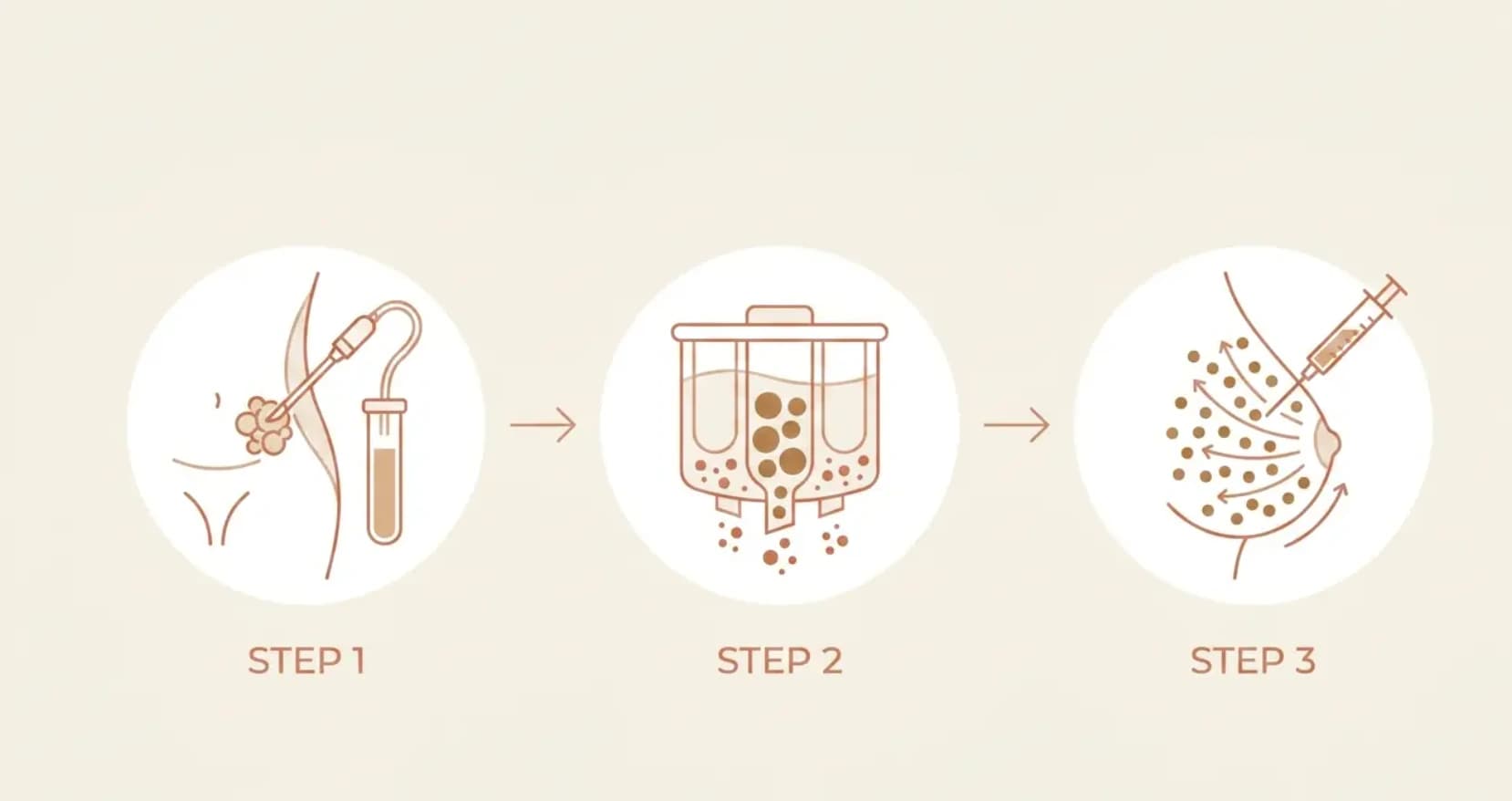
The procedure has two parts done in one surgery. First, fat is harvested from your own body by liposuction. Then it is purified to remove anesthetics, lipids, and medical fluids, leaving only healthy fat cells. Purer fat means less unwanted material is transferred and better survival of the cells.
The purified fat is then placed in dozens of small injections into the breast tissue and between the chest wall and the skin. Using many small deposits helps more of the fat survive and integrate.
What to expect
- There is significant swelling at first, which settles gradually.
- About half of the transferred fat is reabsorbed. This is normal and expected.
- The result keeps improving for weeks; full results can take six months or more.
- Each procedure adds roughly one cup size. For more volume, a second fat transfer is needed.
- The volume that remains is permanent, as long as your weight stays stable.
Breast muscle repair
This is not something you choose. It is part of the explant itself, done only if your muscle needs it.
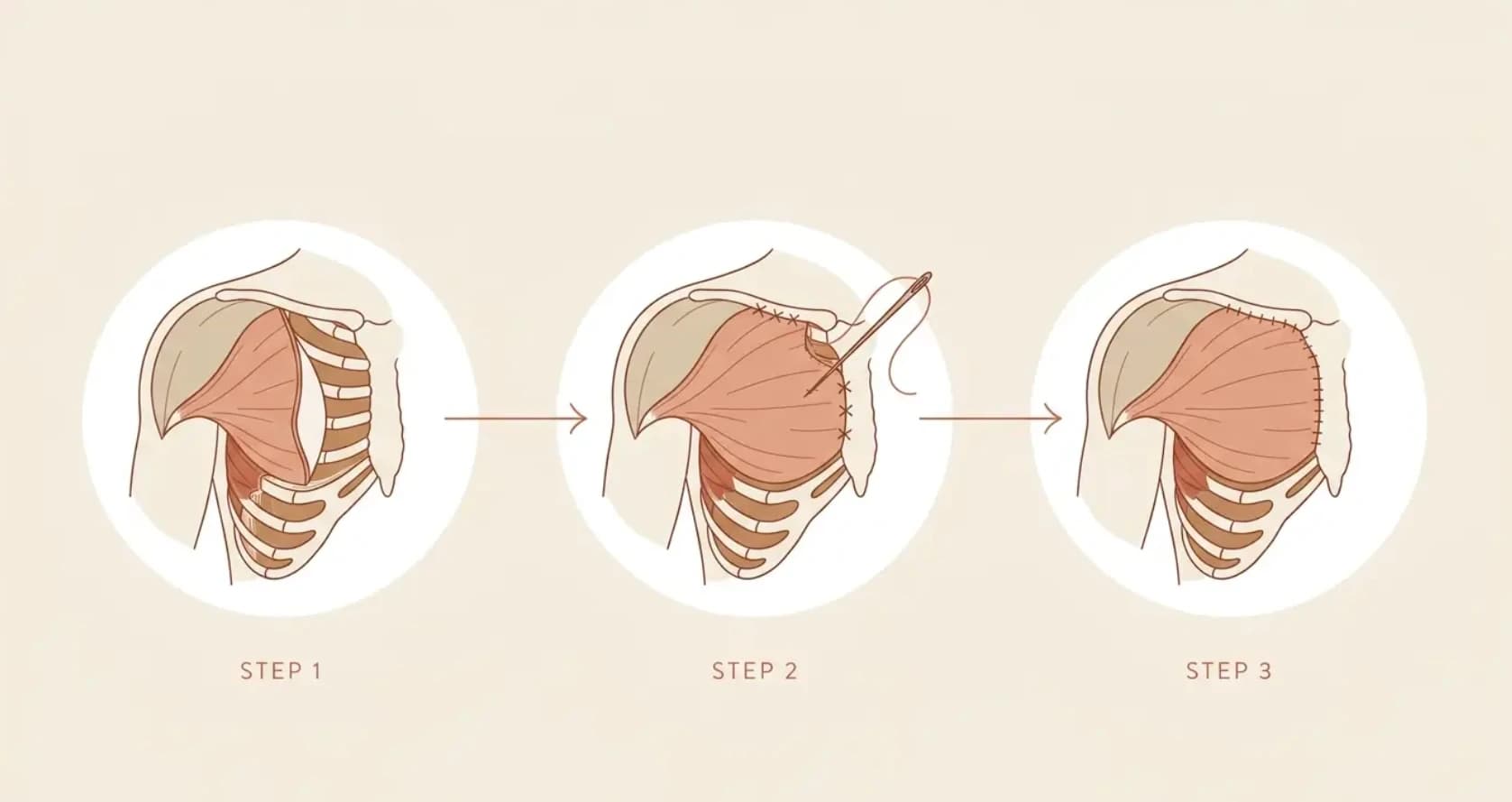
When an implant sits under the muscle, part of the muscle’s attachment to the breastbone is cut during the original surgery, so the implant does not shift when the muscle contracts. How much was released varies from case to case, and the capsule can pull on the muscle during the explant as well.
Repairing it is not a difficult procedure, unless the muscle is completely detached. Dr. Urzola does it during the same surgery, so it does not mean a second operation.
Afterward, rest is part of the treatment. A newly repaired muscle tears if it is strained, and that means going back to surgery. Following your recovery instructions is what protects the result.
What comes next
Ask Dr. Urzola what suits you
Whether you would like restoration at the time of your explant or later, a short set of questions is the place to begin.
Get started